
Justice Pamoja Workshop – Githurai
Building Trust in Justice Systems
November 29 · Githurai Social Justice Centre · Nairobi
One Tuesday in late November 2025, nine Kenyan law students joined our first Justice Pamoja webinar to explore legal responses to domestic and community violence. Several of us met a second time on Friday, 28 November, for a prayer session led by Rev. Benson Kuira. Together, we prayed that our passion for justice would be guided by wisdom.
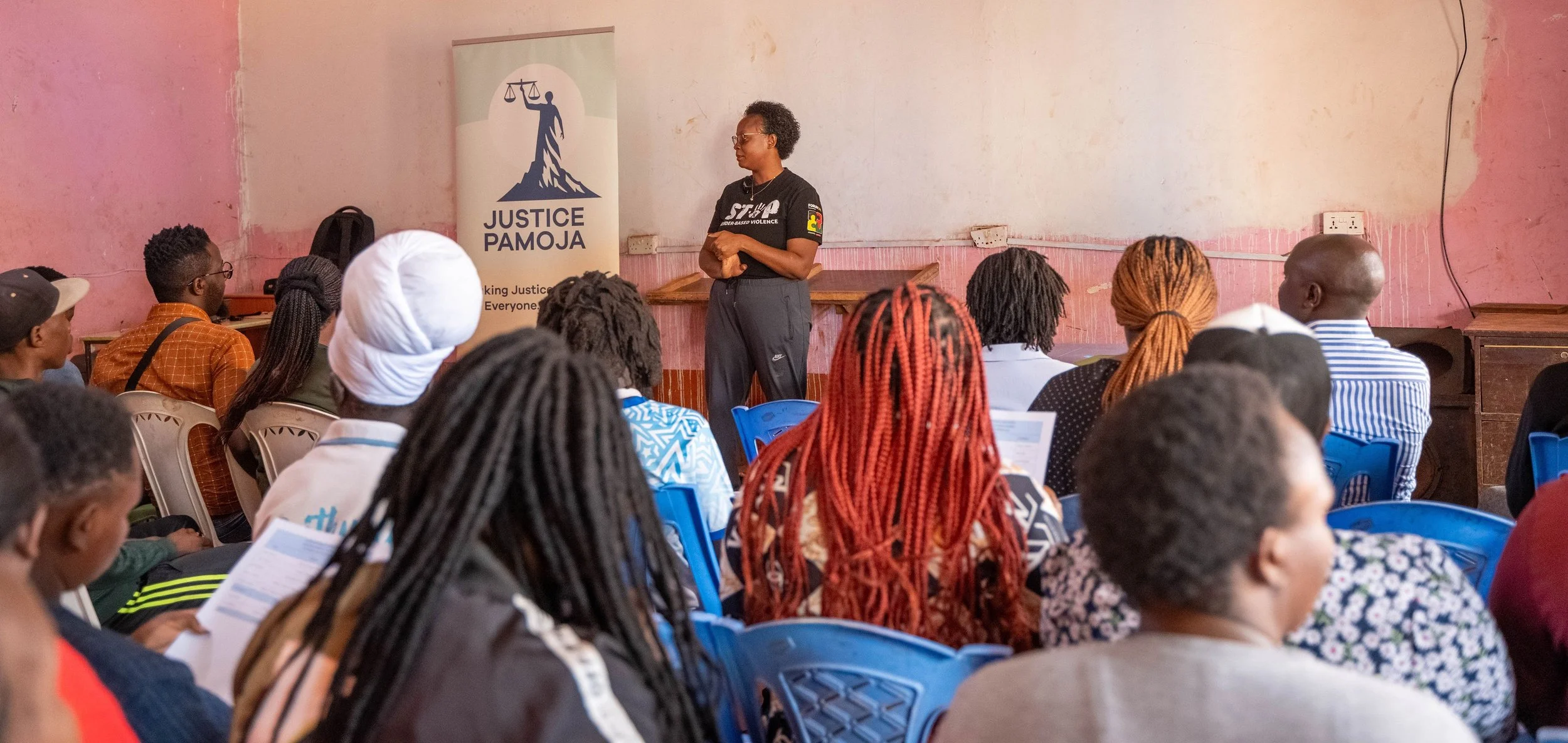
By Saturday, the conversation had moved in person: additional students arrived at the Githurai Social Justice Centre, joined by several practicing attorneys—five of whom led substantive sessions on criminal procedure, evidentiary standards, and Kenya’s legal protections against gender-based violence.
The teaching was serious and demanding. Students engaged deeply with the material, asked hard questions, and began to see how legal theory translates into practice in real communities.
The community discussions were equally meaningful. Participants pushed back on difficult topics, including the legal status of marital rape in Kenya, and asked practical questions about recognizing evidence of child abuse and how to report it safely. These conversations were raw, communal, and honest—exactly the kind of engagement we hoped for.
We had planned for sixty community members. Ninety showed up.
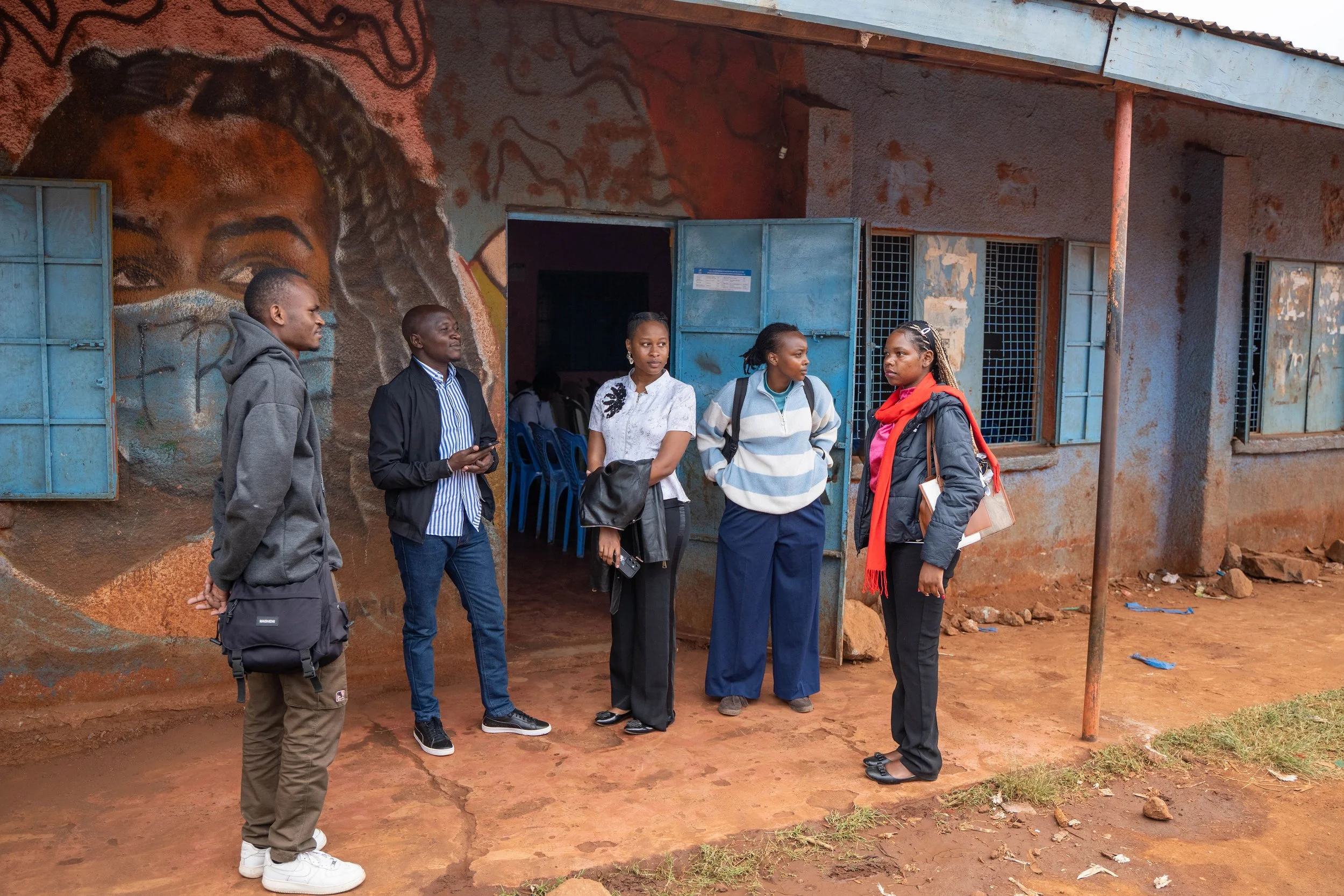
The venue—an old shipping container converted into a meeting space in Githurai —was not large enough, and there were no private rooms for confidential consultations. These were real constraints, and important lessons for future events. At the same time, the location was one of the workshop’s greatest strengths. Legal aid sessions are often held in government buildings or large churches that many community members rarely access. Meeting people where they actually live matters.
By the end of the day, we identified four new potential clients, in addition to a woman we had already invited for follow-up.
The students left energized. They are already planning monthly webinars to continue building the legal skills needed for Justice Pamoja’s future casework.
Likewise, the community members are asking for more.
Thanks to the support of donors and partners, the momentum is real—and growing.
What we learned
Community demand for legal information exceeds expectations
Venue accessibility matters as much as content
Case needs emerging from the community are broader than anticipated
Students are eager for sustained, skills-based engagement