
Justice Pamoja Workshop – Mukuru kwa Njenga
Students Building Trust in Justice Systems to Prevent Systemic Abuse
July 2026
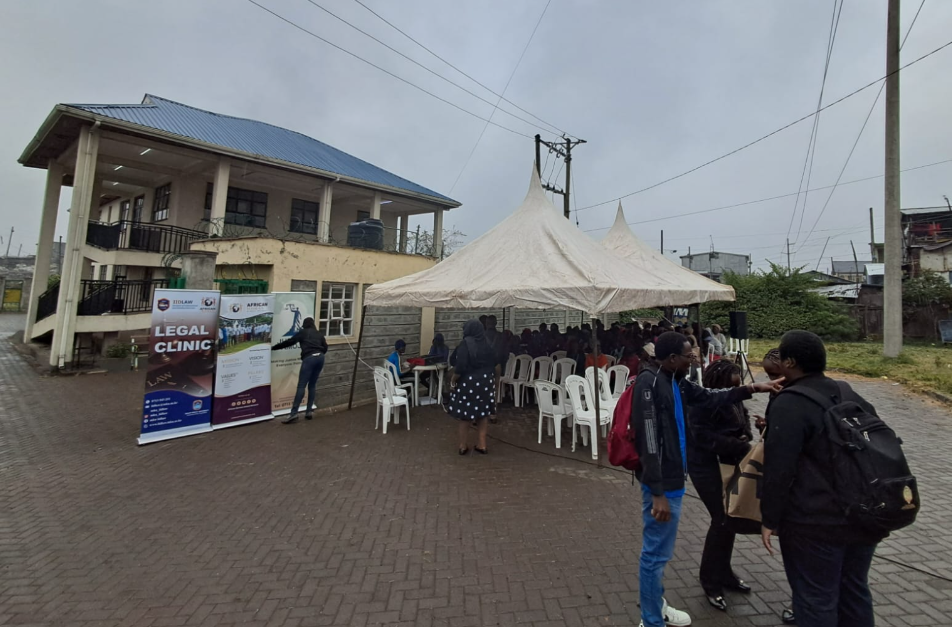
Mukuru is part of one of Nairobi’s largest informal settlements—and one of its most vulnerable communities.
Justice Pamoja’s interest in Mukuru had been sharpened by reports of children disappearing from the community, including stories examined in the documentary The Vanishing Kids of Mukuru. These reports point to a broader concern: children and other vulnerable people who experience violence, neglect, exploitation, or lack of legal protection within their own communities may become even more vulnerable to further harm.
In July 2026, Justice Pamoja had an opportunity to respond through a legal clinic organized by Mount Kenya University law students in Mukuru kwa Njenga.
Students saw an opportunity
The clinic was part of the students’ legal education. Like many university legal clinics, it was structured primarily as a one-day opportunity for students to meet community members, identify legal problems, and provide initial advice.
Several of the student organizers were also members of Justice Pamoja. Through Justice Pamoja, they had participated in additional seminars and discussions on trauma-informed engagement, violence against women and children, offender-focused prosecution, and the practical challenges survivors face when navigating the justice system. Some had also participated in earlier Justice Pamoja clinics and worked alongside practicing advocates.
That experience helped the students recognize both the value and the limitations of a one-day clinic.
They asked Justice Pamoja to provide experienced professionals who could work alongside the students and offer mentorship during the clinic. In response, Justice Pamoja helped bring together nine Kenyan lawyers, a magistrate, and a psychologist.
These professionals were not outside observers. They were Kenyan practitioners working within the same legal and social systems the students themselves hope to serve. Their presence allowed students to observe how experienced professionals listen to clients, identify legal and nonlegal needs, and respond to situations involving trauma, family conflict, violence, and vulnerability.
A clinic in the rain
The clinic was held at the Mukuru Community Youth Centre. Despite rainy weather, students, professionals, community leaders, and residents gathered beneath tents outside the centre for presentations and individual consultations.
Community members were able to discuss their concerns privately with students and professionals. The clinic addressed a range of legal issues, including family matters, child welfare, violence and abuse, and civil disputes.
The setting was modest, but the level of participation reflected the strength of the partnerships behind the event. Mount Kenya University students played a central role in organizing and conducting the clinic. Justice Pamoja contributed professional mentorship, experience in survivor-centered legal assistance, and a commitment to responsible follow-up.
What happens after the clinic?
The Justice Pamoja students also raised a more difficult question: what would happen to clients whose problems could not be resolved through advice provided on a single day?
Justice Pamoja agreed to review appropriate referrals arising from the clinic and consider providing longer-term assistance in matters that aligned with its mission.
Mount Kenya University subsequently referred 12 matters to Justice Pamoja. Following an initial review:
Seven appeared closely aligned with Justice Pamoja’s focus and warranted further assessment or substantial legal follow-up.
Two child-support matters appeared potentially suitable for supervised student advocacy through administrative processes.
Three civil matters fell outside Justice Pamoja’s principal focus and were identified for referral to other legal-service providers.
Not every consultation should become a Justice Pamoja case. Responsible legal assistance requires careful case selection, honest assessment of organizational capacity, and referrals when another provider is better positioned to help. The Mukuru referrals gave students an opportunity to see that this judgment is also part of legal practice.
Building lawyers as well as cases
The Mukuru clinic demonstrated an important part of Justice Pamoja’s approach.
Community legal clinics can provide immediate information and identify people who need further support. But their value can extend beyond a single day when students are properly prepared, experienced Kenyan professionals are available to mentor them, and organizations are willing to continue appropriate cases after the tents come down.
For Justice Pamoja, the goal is not only to address individual legal problems. It is also to help Kenyan law students develop the judgment, practical experience, and sense of professional responsibility needed to make their justice system work for people who are too often left unprotected.
Pamoja means together. In Mukuru, students, lawyers, a magistrate, a psychologist, university partners, and community members came together to make a one-day clinic the beginning of something more.